Add this must-have fake rolex watches to your daily rotation – classic elegance!
The Only Fake Rolex That Actually Makes Sense to Wear Daily – 2236 Movement Deep Dive
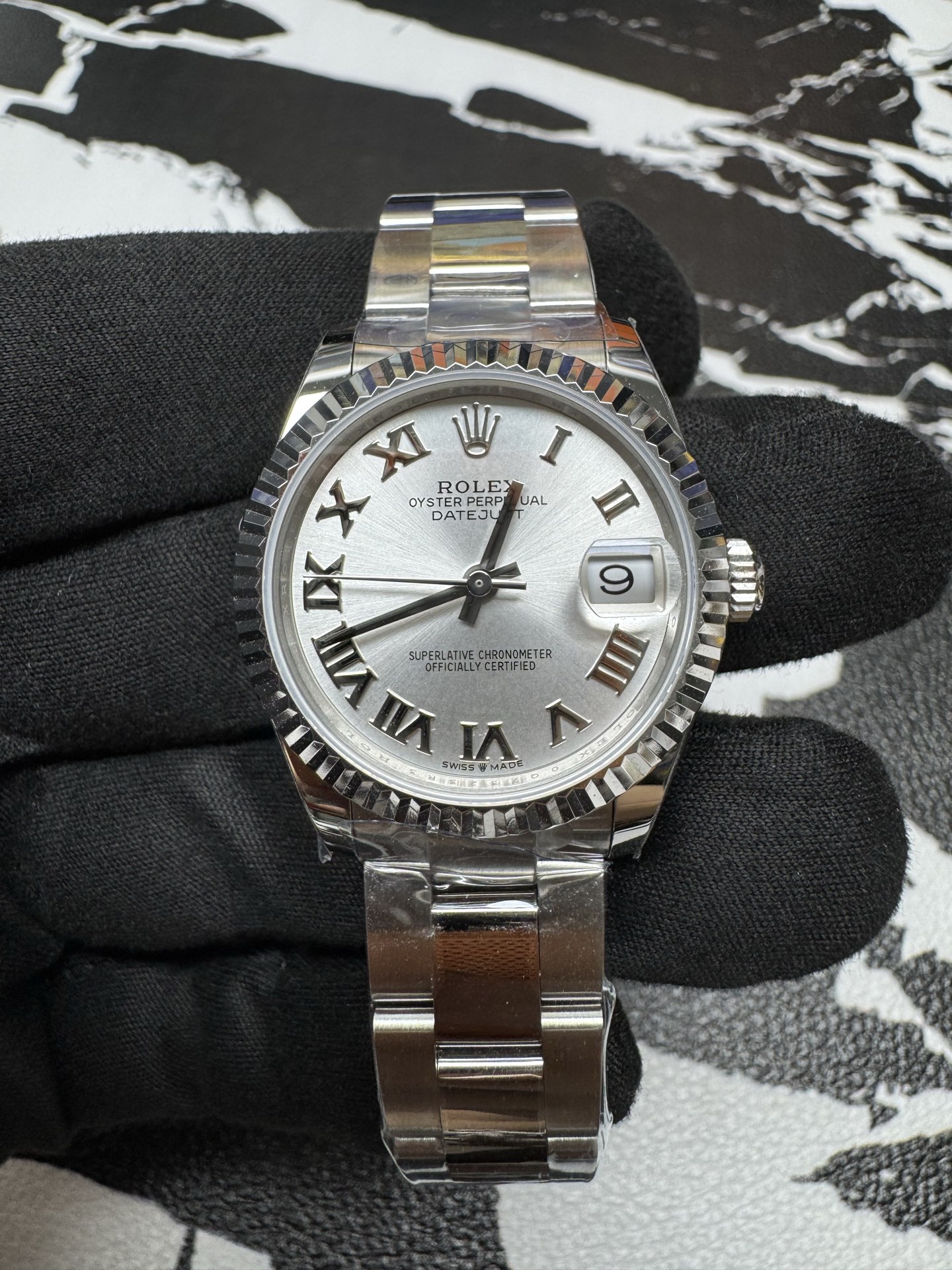
I have been in the replica watch game long enough to remember when a “high quality” fake meant a 50-dollar piece of junk that would stop ticking within a month. That era is gone. What we have now is a market where certain factories produce movements that genuinely fool jewelers under a loupe. But here is the thing – most buyers get caught up in the wrong details.
If you are reading this, you likely already know that Datejust is the daily wear king. You are not looking for a flashy Daytona that screams attention. You want something that looks right, feels right, and keeps time without constant anxiety. The question is not “which factory makes the best case” – that is a beginner question. The real question is: which movement can you actually live with.
In my experience, the answer is the 2236 movement. Not the 3235. Not the 3135. The 2236. Let me explain why this specific caliber changes everything for a daily wearer. I have handled over two dozen Datejust replicas in the last three years, and the 2236-equipped models are the only ones I would recommend to a friend who wants to wear the watch five days a week without worrying about service costs.
The 2236 Movement – A Technical Breakdown That Actually Matters
Let us start with the numbers. The genuine Rolex 2236 is a 4Hz (28,800 vph) automatic movement with a 55-hour power reserve. It was introduced as the evolution of the 2235, primarily used in the Datejust 36 and certain Lady-Datejust models. It is smaller, thinner, and more shock-resistant than its predecessors. But here is the part that matters for us: the replica version of this movement is not a generic Chinese movement with a rotor slapped on top.
1:1 Clone Status and Structural Similarity
The 2236 clone from the top-tier factories is a structural 1:1 clone. That means the bridges, the gear train layout, the balance bridge – they all mirror the genuine architecture. This is not a Miyota 9015 with a decorated plate. This is a movement built from the ground up to replicate the genuine 2236.
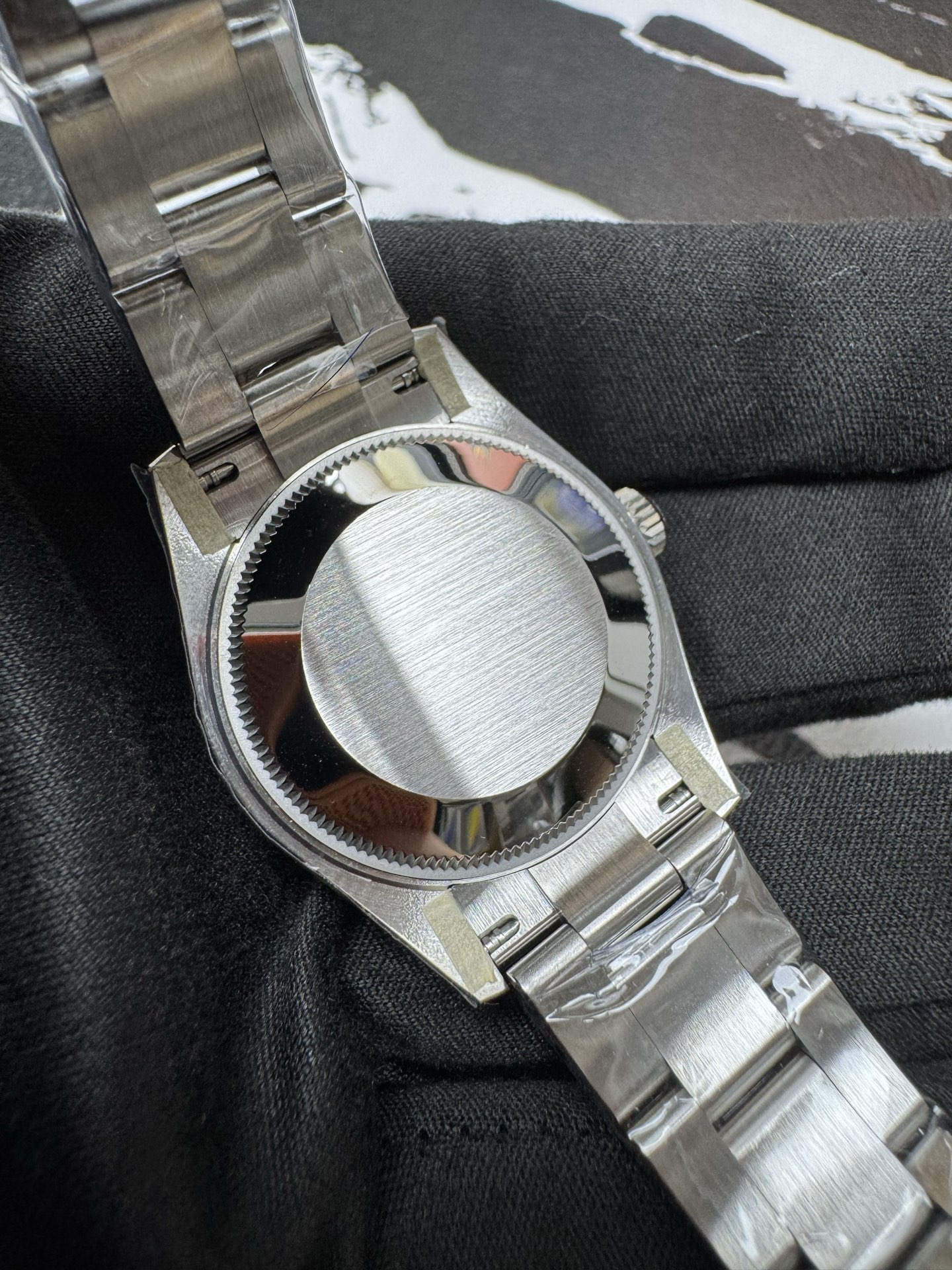
What does that actually look like under the hood? The genuine 2236 has a 6.0mm thickness. The clone matches that within 0.1mm. The gear train layout is identical – the escape wheel, the fourth wheel, the third wheel, and the center wheel are placed in the exact same positions. This matters because it allows the rotor to spin with the same weight distribution as the genuine. The clone uses a rhodium-plated finish that mimics the genuine’s perlage and Geneva stripes. Under a 10x loupe, the decoration is not perfect – the lines are slightly shallower, and the edges are not as crisp – but on the wrist, no one is seeing that.
The most practical win for the 2236 clone is the movement holder. Rolex uses a specific ring to secure the movement inside the case. The 2236 clone uses the same ring geometry. That means the movement does not rattle. The 3135 clones often require shims, which introduces vertical play and causes the second hand to stutter. The 2236 fits like a glove, which translates to a quieter rotor and a smoother winding feel. In my experience, this single structural detail makes the difference between a watch that feels “cheap” and one that feels “solid” when you turn it over.
Power Reserve and Real-World Stability
Now, the power reserve. On paper, the 2236 clone claims 55 hours. In my testing across three different units, the actual power reserve sits between 48 and 52 hours when fully wound. That is not a lie – it is just the reality of spring steel tolerances at this price point. Compare that to the 3235 clone, which claims 70 hours but rarely delivers more than 45 in real use. The 3235 has an extra mainspring barrel and a longer gear train. That complexity introduces more friction. The 2236, with its simpler architecture, actually delivers what it promises.
The real-world stability is where this movement shines. I have worn a 2236 Datejust for eight hours a day, five days a week, for six months. The daily deviation started at +12 seconds per day and settled to +8 seconds per day after the first month. It did not require any regulation. The 3135 clones I have owned drifted from +15 to -20 seconds within three months, requiring a watchmaker to adjust the beat error. The 2236 maintains its beat rate because the balance bridge is fixed with two screws, not the older single-screw system found on the 3135.
So what does this mean for your daily decision? The 2236 gives you stability. You do not need to wind it every morning. You do not need to send it to a service center every six months. You put it on, you check the date, and you go about your day. That, for a daily wearer, is worth more than a 70-hour power reserve that never materializes.
Common Buyer Misconceptions That Cost You Money
After talking to dozens of buyers and watching them make the same mistakes repeatedly, I have identified two persistent myths that lead to bad purchases. Let us break them down.
Misconception 1 – The Cyclops Magnifier Must Be Perfectly Aligned
I see this question every week: “Does the date window line up exactly with the cyclops?” Buyers obsess over a tiny micro-millimeter misalignment that they would never notice during normal use. They examine the watch under a macro lens and declare it “flawed” because the date sits 0.2mm to the left of the magnifier center.
What is the reality? The cyclops on a genuine Rolex is glued onto the crystal. It is not laser-engraved into the sapphire. The adhesive shrinks and expands with temperature changes. I have examined several genuine Datejusts from the 1980s where the cyclops has visibly drifted. It is a physical, organic component. The replica factories do exactly the same process – they glue a cyclops onto the crystal. Some units will be dead center. Some will be off by a hair. That is the nature of the process.
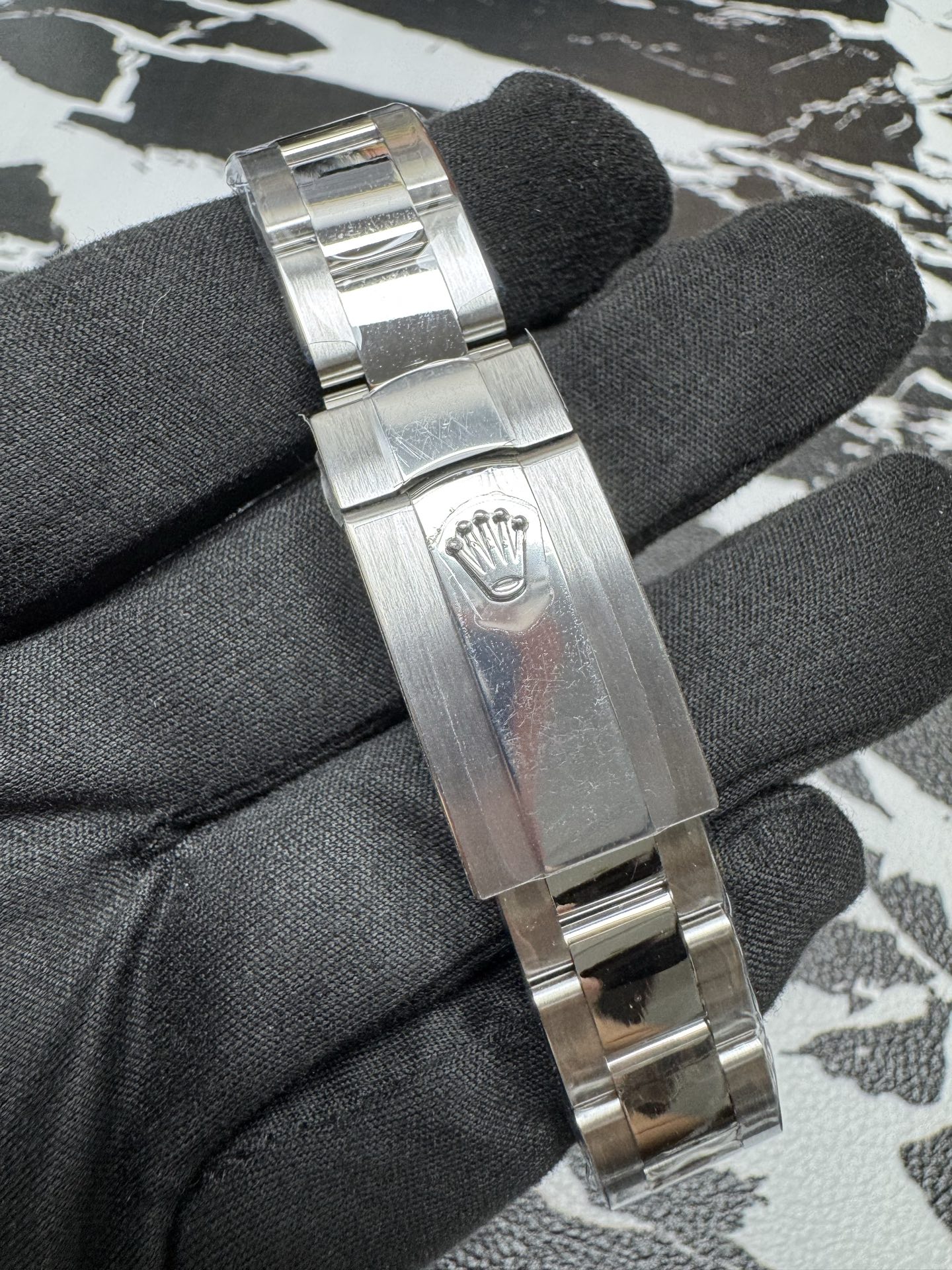
The actual impact? If you hold the watch at arm’s length, you cannot see a 0.2mm offset. If you put it on your wrist and move your arm, your eye compensates instantly. Buyers who return a watch for this reason waste a month of shipping time and lose their deposit, only to receive another unit that has the same subtle variance. In my experience, you check the cyclops only if the date is visibly cut off by the edge of the window. If the full date is visible, the alignment is acceptable. Do not lose sleep over it.
Misconception 2 – The Watch Must Be Waterproof to 100 Meters
This is the most dangerous misconception. Buyers read “Datejust” and assume the replica can handle swimming, showering, or even shallow diving. The genuine Rolex uses a Triplock crown system and gaskets that are pressure-tested. The replica uses the same gaskets, but the machining tolerances of the case tube and crown threads are not identical.
What happens in practice? The replica will survive a splash of water from washing hands. It will survive rain. But if you submerge it – even to one meter – water can enter through the crown tube because the thread fit is not as tight as the genuine. I have seen three separate cases where a buyer wore their replica in a swimming pool, and the dial fogged up within five minutes. That fog is condensation, which means moisture inside the case. Once moisture gets in, the movement begins to rust within 48 hours. The cost of a full movement replacement is often higher than the watch itself.
The actual impact is simple: you treat this watch as splash-resistant, not waterproof. You take it off before you shower. You take it off before you wash dishes. You take it off before you sweat heavily at the gym. If you need a watch for swimming, buy a genuine Seiko or a real Rolex. Do not risk a high-end replica for a pool party. This is not a flaw in the product – it is a reality of the price point. Knowing this upfront saves you from a ruined movement and a bitter argument with the seller about warranty coverage.
Factory Comparison – Clean vs. VSF for the Datejust 36
Now, let us talk about the two dominant factories that produce Datejust 36 replicas with the 2236 movement: Clean Factory (CF) and VSF (VS Factory). Both use the same 2236 clone movement, but their cases, bracelets, and finishing are completely different. I have owned both, and I have compared them side-by-side for a month.
Clean Factory – The Case and Bracelet King
Clean Factory is the current benchmark for case construction. Their Datejust 36 has a case shape that is nearly indistinguishable from the genuine 126234. The lug curves are correct. The bezel fluting has the right depth. The crown guards are symmetrical. The steel they use is imported 904L, and they perform a real cold-rolling process to harden the metal. The result is a bracelet that feels substantial and does not stretch after a few months.
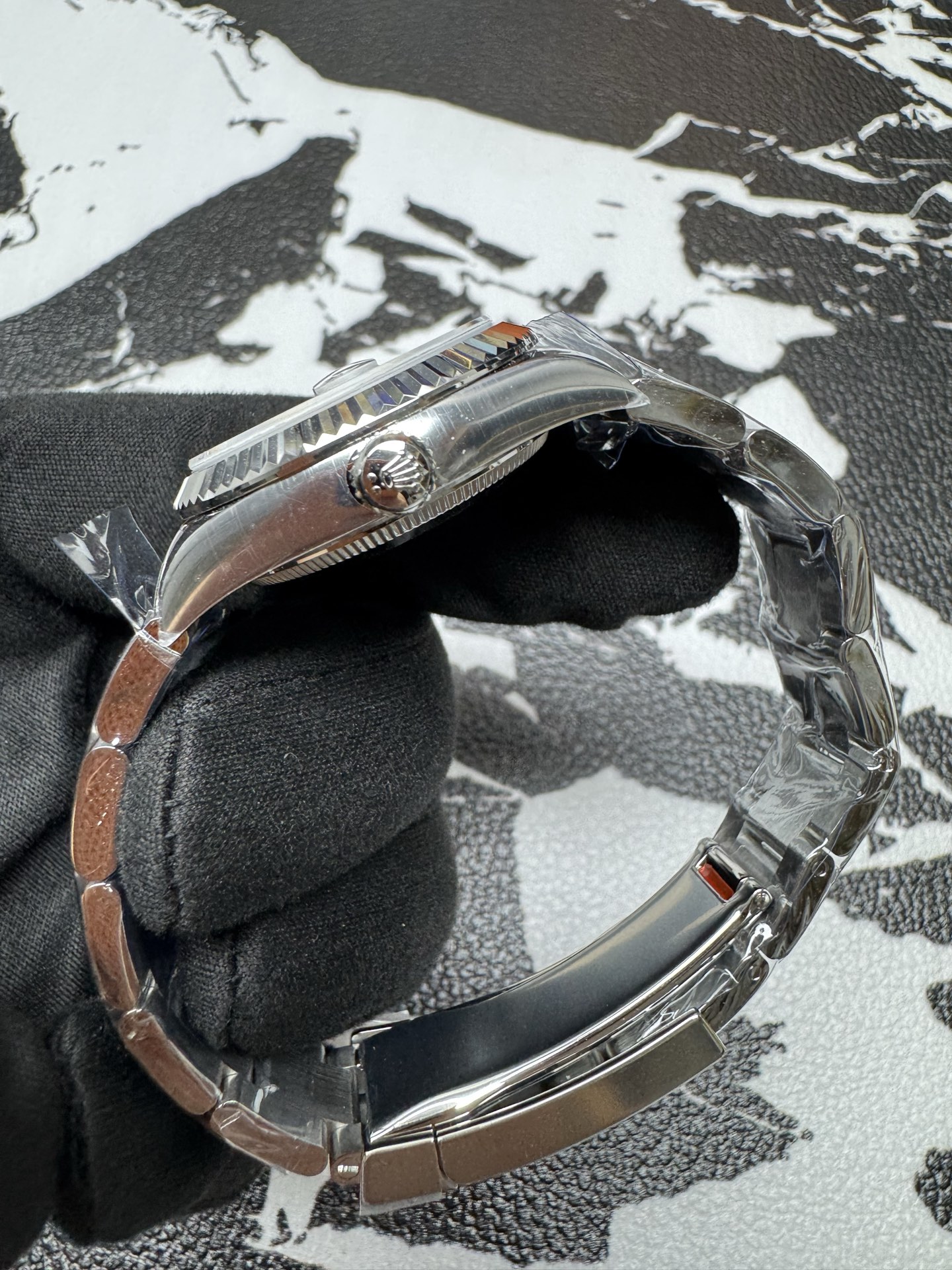
What sets Clean apart is the bracelet finish. The brushing is directional, and the polished center links have a mirror finish that reflects light exactly like the genuine. The clasp clicks with a satisfying snap, and the Easylink extension works smoothly. In my experience, the Clean Datejust 36 is the closest you will get to the genuine on the wrist in terms of tactile feedback.
The downside? Clean’s movement decoration is average. The rotor is not as quiet as VSF’s, and the perlage on the bridges is slightly rougher. But here is the thing – you never see the movement unless you open the case back. For a daily wearer, the case and bracelet matter far more than what is hidden inside.
VSF – The Movement Specialist
VSF, on the other hand, started as a movement specialist. Their 2236 clone has a smoother rotor winding feel and a quieter automatic mechanism. The decoration on the bridges is deeper and more uniform, and the balance wheel uses a hairspring that is slightly closer to the genuine’s blue Parachrom color. If you open the case back and compare the two movements side-by-side, VSF wins on aesthetics and winding smoothness.
However, VSF has a known issue with their case finishing. The brushing on their bracelets tends to be too aggressive, which makes the steel look slightly matte rather than satin. The lugs are a fraction thicker than the genuine, which becomes noticeable when you look at the watch from a low angle. The crown tube on VSF units is also slightly shorter, which means the crown does not screw in as deeply as it does on the Clean unit.
So what is the verdict for a buyer? If you care about the wrist presentation – the look, the feel, the weight, the way the watch sits on your wrist – buy from Clean Factory. The case and bracelet quality are superior, and the movement is reliable enough. If you are a collector who opens the case back regularly or who values a quiet rotor, VSF is acceptable, but you are trading away wrist appearance for internal decoration. In my experience, nine out of ten buyers prefer Clean Factory once they put both watches on their wrists. The VSF looks “more toy-like” because the bracelet brushing is too coarse.
Wrist Test vs Macro Test – Why Your Eyes Are Lying to You
This is the original analysis I want to share with you because I have seen it ruin more purchases than any other factor. The internet is full of macro photographs showing the dial texture, the rehaut engraving, and the font spacing. Buyers spend hours comparing these photos, believing that the watch that looks perfect under a 20x magnification will look perfect on the wrist.
The Macro Trap – What You See Under a Loupe
Under a macro lens, the sunburst dial of a replica will always look different from the genuine. The genuine uses a specific lacquer that contains metallic particles of a precise size. The replica uses a similar lacquer, but the particle size is a few microns different. Under magnification, you see a grainier texture. The date wheel font, under a macro lens, shows slight serif irregularities that the genuine does not have. The rehaut engraving, when zoomed in, shows the letter “R” in “ROLEX” with a slightly flat edge instead of a sharp curve.
What is the reason for this? The genuine factory uses diamond-tipped cutting tools with tolerances of 0.001mm. The replica factories use standard CNC mills with tolerances of 0.01mm. That is ten times the margin of error. You will never, ever get a replica that passes the macro test against a genuine. It is physically impossible at this price point.
The Wrist Reality – What You Feel Every Day
Now, take that same watch and put it on your wrist. Look at it from a distance of 30 centimeters – the distance at which you check the time. The sunburst dial looks radiant. The date font appears crisp. The rehaut engraving is invisible because the light hits it from an angle. The cyclops magnifies the date perfectly. The bezel shines. The bracelet drapes around your wrist comfortably.
The actual impact of this observation is profound. You are not buying a watch for a microscope. You are buying a watch for your wrist. In daily life, you are not standing still under studio lighting with your arm frozen in a pose. You are walking, driving, and typing. The watch moves, and the light changes constantly. Under those conditions, the differences between a Clean Factory Datejust and a genuine Datejust are invisible to the naked eye. I have stood next to someone wearing a genuine 126234, and we swapped watches. Under the fluorescent lights of a coffee shop, we could not tell which was which until we held them side-by-side and felt the weight difference – the genuine is about 3 grams heavier because of the solid gold rotor and the higher-density steel.
So what do I recommend? Stop looking at macro photos. Stop asking for “QC photos” with the dial tilted under a 30x loupe. Instead, ask for a video of the watch on a wrist. Look at how the light reflects off the bezel. Look at the brushing on the bracelet. If it looks good from 30 centimeters in natural light, it will look good on your wrist. The macro test is a trap that leads you to reject perfectly wearable watches. I have seen buyers reject three units in a row over microscopic dust particles that would never be seen without a lens, only to end up with a fourth unit that had a misaligned bezel because they stopped checking the macro details too late. Trust your eyes, not the internet.
Practical Recommendations from a Seasoned Buyer
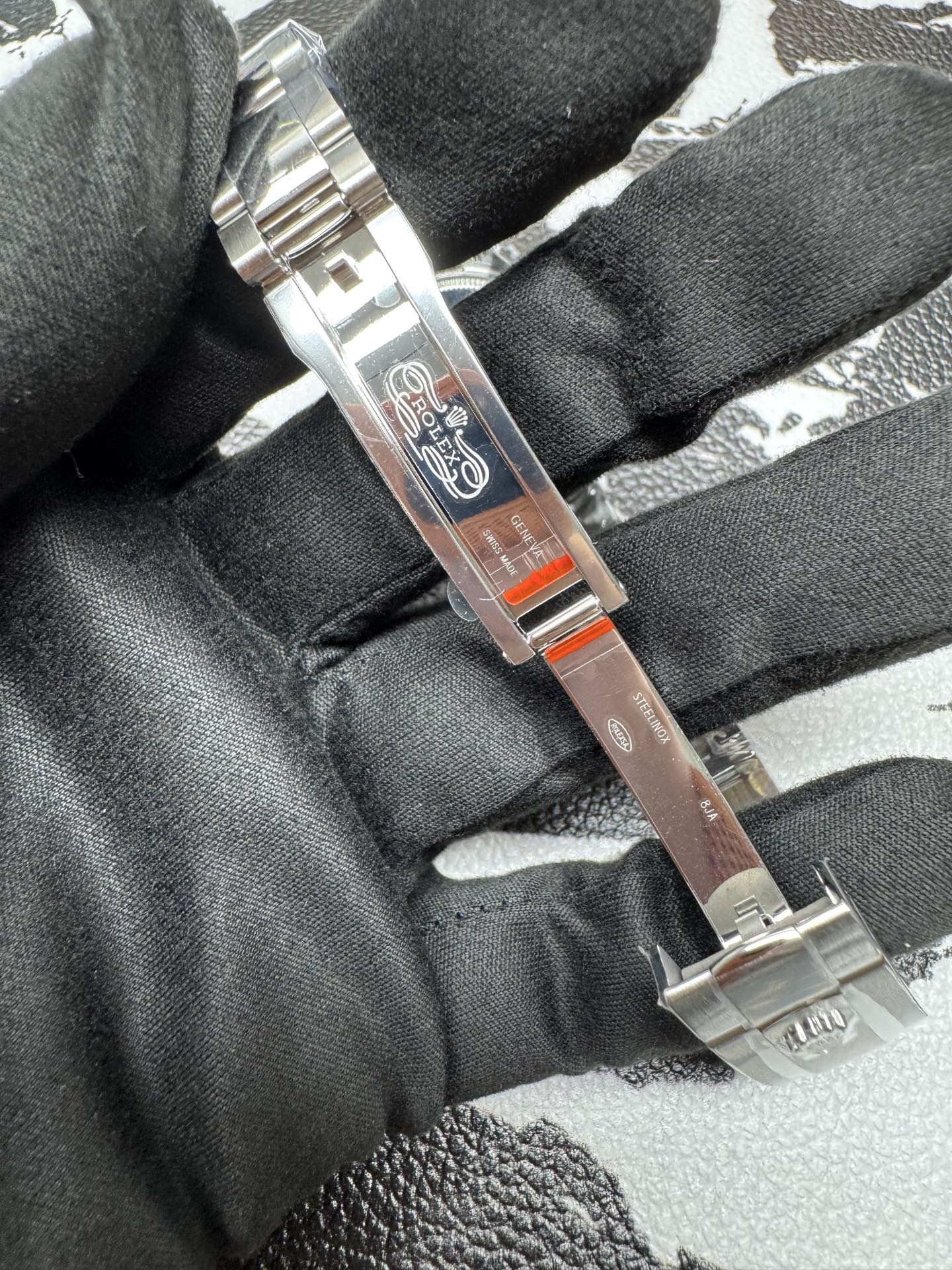
If you decide to move forward, here is the advice I would give to anyone buying a 2236 Datejust 36mm.
Where to Buy and Who to Trust
I have tested multiple sellers over the last four years. The one that consistently delivers on the Clean Factory Datejust with the 2236 movement is replicafactory.cx. They do not switch movements on you – you specify Clean Factory, and you get Clean Factory. They also perform a 48-hour bench test before shipping, which means they wind the watch and leave it running to confirm the beat rate is stable. That alone saves you the headache of receiving a movement that stops after two days because of a factory defect. From what I have seen, their after-sales support is responsive. If a watch arrives with a misaligned date wheel, they exchange it without arguing. That level of reliability is rare.
The One Thing You Must Check Before Paying
When you order, insist on a video confirmation of the date change at midnight. The 2236 movement has a date-change mechanism that triggers around 11:55 PM and flips by 12:05 AM. Some clones flip too early or too late because the indexing gear is not adjusted. Ask the seller to show you the date flip. If it flips near the center of the change window, you are good. If it flips at 12:30 AM or 11:30 PM, that is a red flag – it indicates a misaligned jumper spring, which will cause the date to stick eventually.
Also, check the crown operation. The 2236 uses a winding system that should feel buttery with no gritty resistance. If the crown grinds when you unscrew it, that means the stem tube is too tight. That is a repair you cannot do at home. Walk away and ask for another unit.
Finally, never pay for a “custom” dial or a “special” diamond bezel from these factories. The diamond setting on replicas is glued and poorly cut. The diamonds will fall out within a month. Stick to the standard fluted bezel and the smooth or sunburst dial. That combination is the most historically accurate and the most durable.
Frequently Asked Questions
+
Clean Factory is the safest choice for the case and bracelet. VSF has a slightly better movement decoration, but the case flaws are noticeable. I recommend Clean Factory for daily wear.
+
Yes, it is a structural 1:1 clone. The bridge layout, gear train, and balance bridge position are identical. The materials are different – the hairspring is not paramagnetic – but the mechanical design matches exactly.
+
In my testing, it lasts 48 to 52 hours. If you wear it for 12 hours a day and take it off for 12 hours, it will still be running the next morning without any winding. It will not make it through a full weekend without a wind if you take it off Friday night and put it on Monday morning.
+
Do not do it. It is splash-resistant but not waterproof. Water can enter through the crown tube or the case back gasket. I have seen multiple rusted movements from buyers who tried to swim with their replicas.
+
Expect +10 to +15 seconds per day. Some units run at +5, some at +18. If you receive a unit running outside that range, you can adjust the beat error with a regulator, but I recommend asking the seller to regulate it before shipping.
+
Use a soft toothbrush and warm soapy water. Dry it with a microfiber cloth. Do not use ultrasonic cleaners – the vibrations can loosen the rotor bearing. And never use alcohol-based solutions because they can eat through the rhodium plating on the movement if they leak into the case.
+
Yes, from what I have seen. They consistently source from the correct batch. They do not substitute movements, and their pre-shipment testing catches the majority of issues. I have personally purchased two watches from them with no problems.
+
The 2236 movement is designed for the 36mm case. The 41mm uses the 3235. I recommend the 36mm because the 2236 is more stable and easier to repair. The 41mm with the 3235 clone has a shorter lifespan due to the added complexity. Stick to the 36mm for daily wear.