South Yorkshire Times, October 27th, 1933
Clever Old Lady
Musical Talent In A Cottage
Dedications To Royalty
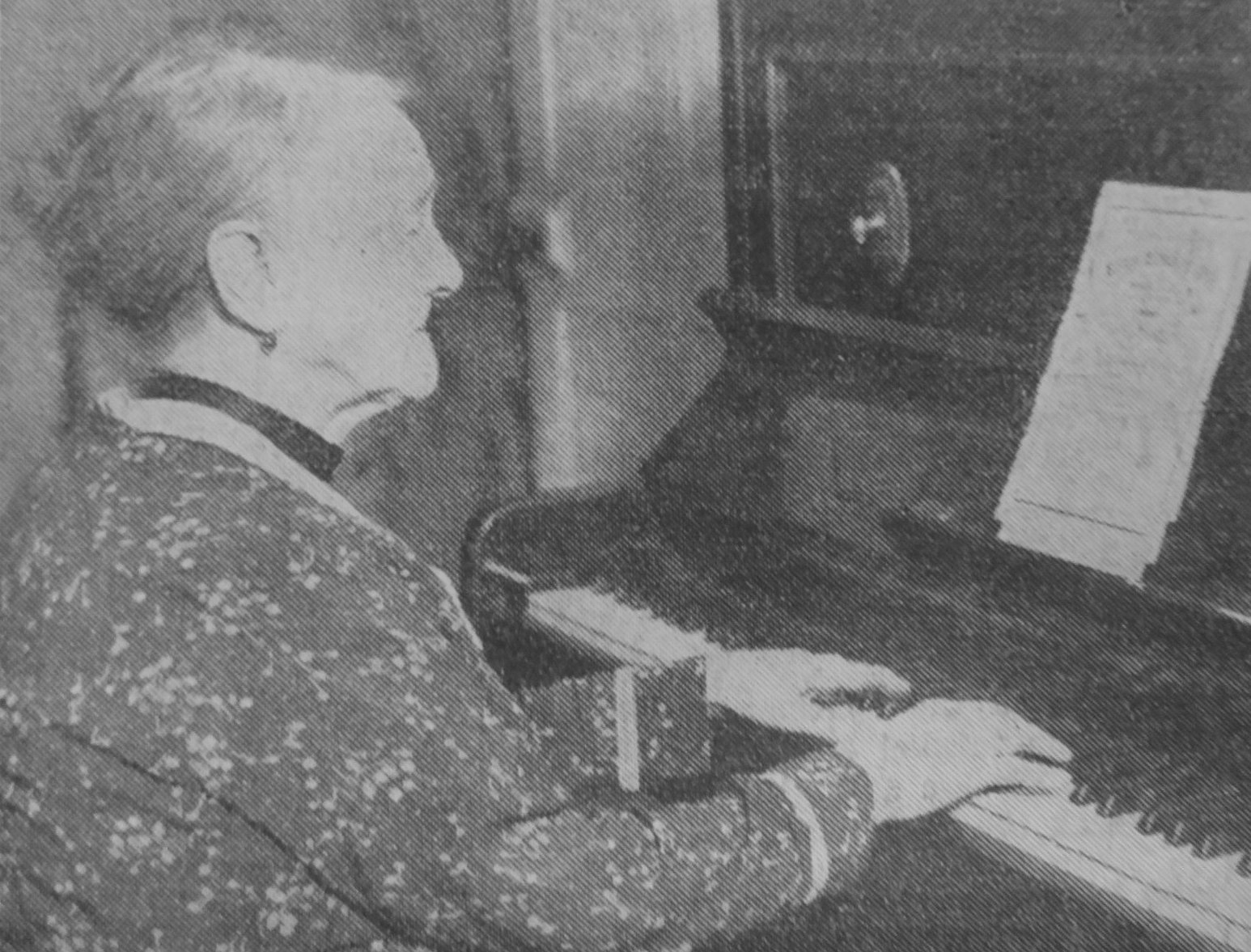
In a quiet lane between the Bull’s Head at Brampton and the Counting Houses stands a little cottage where dwells Mrs. Redfern, the wife of a miner formerly employed at Cortonwood. The other day Mrs. Redfern attained her 74th birthday and celebrated the event by entertaining a party with pianoforte and song. She says it was one of the happiest birthdays of her life.
Surprise Item
It happened this way. Attending a “social” following the annual meeting of the Wombwell Parks Bowls Club, Mrs. Redfern was persuaded to oblige with a song. The company did not expect much, but it was her birthday and “any old ditty would do.” She went to the piano and with perfection of touch that astonished the whole company she accompanied herself in a little coon song. Mrs. Redfern obliged with “The Christening,” and “Are you from Heaven?” Modestly she retired with the remark that she thought they had had enough, but not before the company were satisfied that they had discovered new talent. Not a little amazed to realise that she had lived in Wombwell district for forty years without being discovered, Mrs. Redfern heard them whisper that she had “come from Sheffield.”
Memorial Music
Since last weekend a “South Yorkshire Times” representative has made more discoveries in regard to this remarkable old lady. She is a Licentiate of the Royal Academy of Music and an Associate of the Royal College of Music, and she composed music that was played by fifty bands at the funeral of King Edward. She has composed the tunes of a number of hymns that are sung in Methodist chapels.
Homely Wisdom
Visited at her cottage, Mrs. Redfern was reluctant to talk about her accomplishments. “I do not like a lot of fuss,” she said, “and I would rather you didn’t say anything about it.” But she was persuaded to talk. “I began to take lessons on the piano when I was six years old,” she said. “At that time we lived in the Halifax district. I was an only child and my parents could afford it. Before I left school I was able to play the piano quite well. But do not think that because I was trained in music I had not to work. Naturally, I was anxious not to spoil my hands, but my mother used to say, ‘Get that copper kettle cleaned. Do not think that because you can play the piano you can lead a lady’s life You are not a lady if you cannot do housework.”
Later in life Mrs. Redfern was to learn the value of being domesticated. When quite a young woman she was left a widow without support and had to fend for herself. For the next two years she maintained herself and her family of four children by teaching music. Since her second marriage she has played only for her own enjoyment and the entertainment of a few friends.
Dedicated To Royalty
For most of the important events in the life of English Royalty Mrs. Redfern has written music and has many acknowledgments from the Royal Family. For the death of King Edward, she composed a new setting to the hymn, “Now the labourer’s task is o’er,” and received due appreciation. It was submitted first of all in manuscript, but at the royal request she had it printed. The works brought congratulatory letters from the Queen Mother and King George. It was her intention to compose a piece for King George’s coronation, but severe illness prevented her doing so. The funeral hymn, entitled “Rest,’ was copyrighted, and “dedicated to and accepted by his Most Gracious Majesty, King George V.”
Harmony
On being invited to play over a few of her pieces, Mrs. Redfern drew up to the piano, a little spare figure with silver hair and wrinkled features. The room was chilly, so she had put on a little knitted jumper to keep out the cold. She had to have a cushion to reach the keyboard. Tiny hands with the slender fingers of the artist reached out fondly for the keys and music voice filled the room with sweet harmony. In the playing it was easy to detect the technique of the trained musician. Once Mrs. Redfern had commenced to play she did not require much persuasion to continue. “Do you like it?” she asked after singing a little lullaby and then went on to play and sing “Are you from Heaven?” and other pieces suitable for light vocal accompaniment. “I used to be a soprano,” she said, “but I do not know what you would call me now.” There was no need for apology. Her voice is thin, as is natural for one of her age, but there is exquisite sweetness in it.
“I Love My Music”
Her touch on the piano is remarkably firm. She played “Abide with me,” by Carl Hemann, with fantasia variations, without a flaw. In the circumstances there appeared to be something wistful and reminiscent about the performance. Piano and player were as one; the old lady was lost in the music. “I love my music,” she said when she had finished. Many an hour I spend in this room when I have done my work. If I have worries of any kind I come and play, and it takes all my cares away. I have no one near me except my husband, but my piano is a great comfort.” Mrs. Redfern said her father was always against putting letters behind her name, and for that reason she had never done so. He would always say, “Let them take the music for what it is. If they understand music, they will appreciate the quality; and if they do not the best music is wasted on them.” Many people in the neighbourhood will be surprised to hear that she is a qualified musician. Often passers-by in the lane have paused to listen to the music, but they have not known exactly where it was coming from. Mrs. Redfern says she will never be unhappy so long as she has her piano and the power in her hands to play.